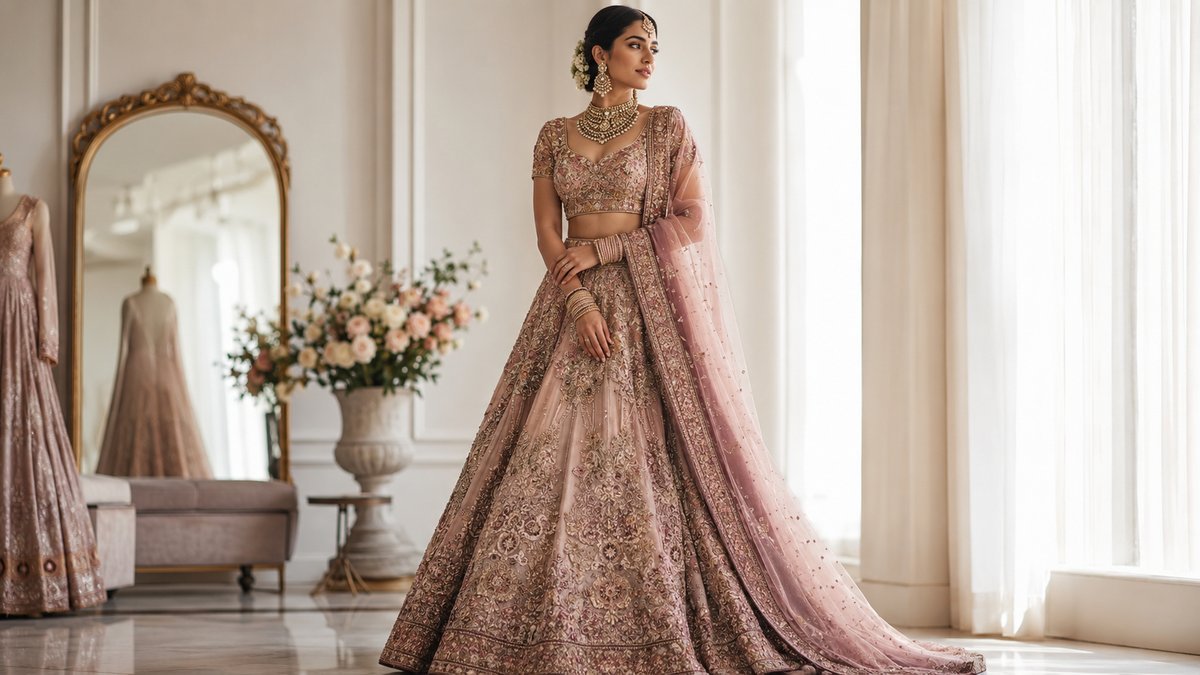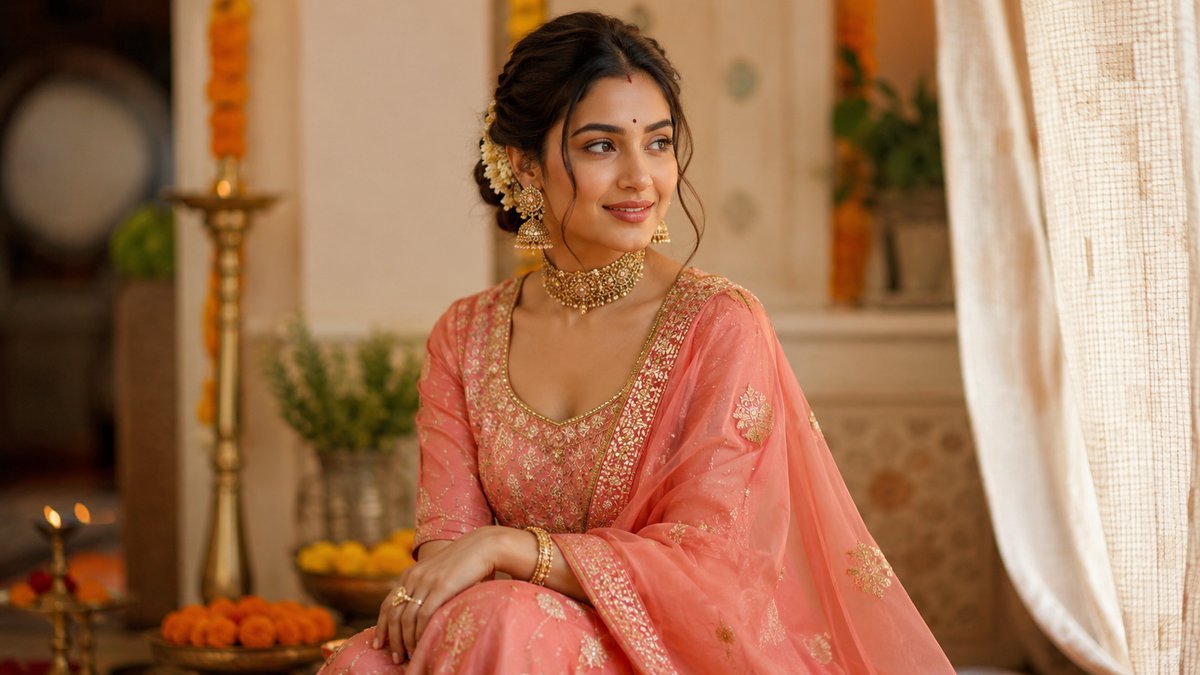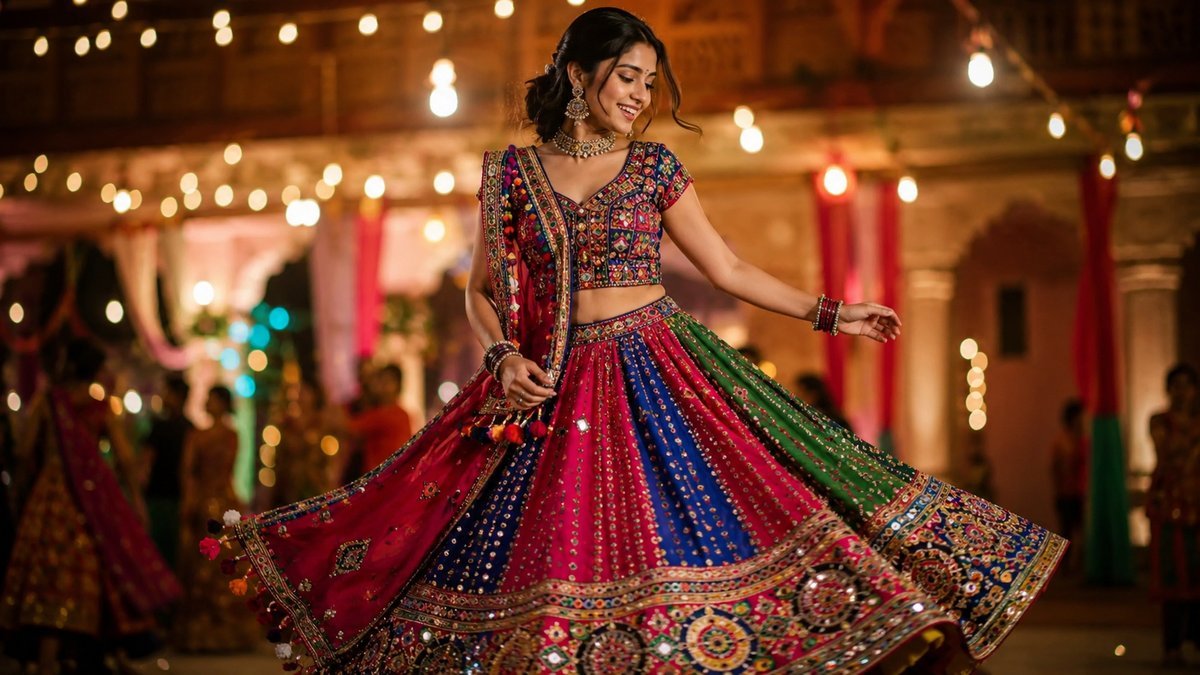
Sharad Navratri in 2026 begins on Sunday, 11 October and continues through Monday, 19 October, followed by Dussehra on Tuesday, 20 October. For women planning Garba nights, society events, college celebrations or festive family gatherings, the ideal outfit must do more than look good in a still photograph. It must move, breathe and remain secure.
A beautiful Garba lehenga in Pune should allow you to raise your arms, turn, walk, sit and dance without repeatedly adjusting the blouse or dupatta. This guide covers practical Navratri outfit ideas for 2026, including silhouettes, blouse construction, fabric, colour and ways to reuse the outfit after the festival.
These tests are more useful than choosing an outfit only because it matches a trending reel. A design that restricts movement will feel uncomfortable long before the Garba night ends.
Want a Garba lehenga built for movement and fit?
1. A lightweight flared Garba lehenga
A circular or panelled lehenga creates beautiful movement during Garba, but the volume should be controlled through fabric and construction. A very heavy border can pull the skirt downward, while too many stiff layers can make turns feel cumbersome.
Choose a lighter base with strategically placed detail. Mirror accents, threadwork, borders or appliques can create visual energy without covering every surface. The waistband should be secure, finished cleanly and tested through actual movement.
2. A lehenga with a fitted short jacket
A short jacket can add structure and give the wearer an additional layer of coverage. It may be worn over a sleeveless or short-sleeved blouse and removed later if the evening becomes warm.
Keep the jacket length above the widest part of the skirt so the silhouette remains balanced. A heavily worked jacket works best with a calmer lehenga.
3. A crop top and festive skirt
A crop top and skirt can be one of the most reusable Navratri combinations. The top may later work with trousers, a saree or another skirt, while the festive skirt can be paired with a plain blouse or shirt.
For Garba, the top should be constructed for movement rather than designed only for a front-facing pose. Check the underarm, hem and back closure while lifting both arms.
4. A traditional chaniya choli with edited detail
A chaniya choli can embrace the visual language of Garba through colour, mirror work, embroidery and movement. The most refined version does not require every possible detail. Select a clear motif direction and allow areas of the fabric to breathe.
If the skirt is richly patterned, use a more focused blouse. If the blouse has strong mirror or threadwork, keep the dupatta border lighter so the outfit remains visually balanced.
5. A draped skirt with a structured blouse
A draped skirt offers a contemporary option for women who want an Indo-Western Navratri look. Pair it with a structured blouse, fitted top or cropped jacket.
The drape must be built securely into the garment. Loose fabric that looks elegant during a fitting may become distracting while dancing. Test the full range of movement before final finishing.
6. A sharara or flared trouser set
A sharara can create rhythmic movement without the same amount of skirt fabric. It is a useful alternative for women who prefer trousers or want a silhouette that can be worn again for family functions.
Use a shorter kurta or structured blouse so the proportion remains clear. A dupatta can add traditional colour, but it should be attached or draped securely for Garba.
7. A saree-inspired pre-draped outfit
A pre-draped saree or saree-inspired set can work for a Navratri evening or Dussehra celebration. It offers the visual elegance of a drape with greater security than a loosely pinned saree.
This option is better suited to lighter dancing or a festive event than to an intense Garba session unless the construction has been specifically tested for movement.
8. A refined Dussehra outfit
Dussehra may involve a family puja, community celebration or festive lunch rather than Garba. A saree with a custom blouse, silk-blend Anarkali, kurta-skirt set or restrained lehenga can create an appropriate transition from the high-energy Navratri nights.
Deep red, marigold, ivory, green and antique gold are versatile directions. Choose the silhouette according to the event rather than simply repeating the previous night's Garba styling.
Navratri blouse designs that support movement
The blouse is often the part of the outfit that determines whether Garba feels effortless or uncomfortable. A beautiful neckline cannot compensate for slipping straps, pulling armholes or weak closures.
Structured square-neck blouse
A square neckline can frame the upper body cleanly and pair well with a flared lehenga. The strap width and back construction should be adapted to the wearer so the blouse remains stable.
Secure halter-inspired blouse
A halter direction can look modern, but it should distribute pressure comfortably around the neck and back. Internal support and lining are essential for long wear.
Elbow-sleeve traditional blouse
An elbow-sleeve blouse can balance a highly flared skirt and provide more coverage. Check the sleeve width at the elbow and upper arm so movement is not restricted.
Corset-inspired blouse
A corset-inspired blouse can provide support and a strong contemporary shape. It should not be treated as an excuse for excessive tightness. The wearer must be able to breathe deeply, turn and dance.
Jacket-style or front-opening blouse
A front-opening construction can simplify dressing and create a strong design detail. Closures must be reinforced and placed so they do not open under movement.
Fabrics that work for a lightweight Garba outfit
The best fabric depends on the required fall and volume, but it should not trap unnecessary weight or make the wearer overheat during movement.
- Georgette and other fluid fabrics for movement and softer drape
- Light cotton or cotton blends for breathable traditional styling
- Organza for crisp volume when used thoughtfully
- Lightweight silks for festive richness without excessive layering
- Tulle or net for controlled volume, provided the lining and edges are comfortable
- Mixed panels when the design needs both structure and movement
Heavy velvet, dense all-over work and very stiff cancan layers may create visual drama but can reduce comfort. Use them only when the wearer understands the trade-off and the event requires that level of structure.
Mirror work, embroidery and embellishment
Mirror work is strongly associated with Garba styling, but the placement and finish matter. Poorly secured mirrors, rough edges or heavy clusters can scratch the wearer or catch on the dupatta.
Ask how the embellishment is finished on the inside and whether it has been tested through movement. Threadwork, applique, tassels, shells, metal accents and borders can also create a vibrant Navratri look when used with a clear design plan.
How to secure the dupatta for Garba
- Use discreet loops or attachment points built into the blouse or waistband.
- Keep the drape clear of the arms and hands.
- Avoid an excessively long trailing end in crowded spaces.
- Test the full look while turning, not only while standing still.
- Use a belt only when it supports the design and does not restrict breathing.
- Keep pins smooth, strong and positioned away from direct skin contact.
A well-planned dupatta should contribute colour and movement without becoming something you need to hold throughout the evening.
Navratri colour ideas for 2026
Festival colour calendars can be fun for daily styling, but you do not need nine separate outfits. One flexible base can be changed through dupattas, jewellery, jackets and blouse combinations.
- Rani pink with orange for energetic contrast
- Royal blue with mirror or silver-toned detail
- Emerald with antique gold
- Marigold with magenta
- Ivory with multicolour embroidery
- Wine with muted gold for an evening event
- Black with bright handcrafted accents where appropriate to the event
- Teal, purple or rust for a less expected but festive palette
Choose colours that remain useful beyond Navratri. A versatile blouse or skirt in a strong jewel tone can work for sangeet events, weddings and festive dinners later.
Footwear, jewellery and practical styling
- Wear cushioned flats, juttis or low stable heels that have already been broken in.
- Avoid sharp jewellery edges that can catch on the blouse or dupatta.
- Use earrings with secure backs and consider weight for a long dance session.
- Tie long hair or secure it away from mirrors, tassels and necklaces.
- Carry only essential items in a small crossbody, potli or secure pocket.
- Keep a minimal repair kit with pins, a spare hook and fashion tape where suitable.
Custom-order timeline for a Garba lehenga in Pune
A custom lehenga needs time for concept development, fabric selection, construction, embellishment and movement-focused fittings. Enquire early when you want handwork, a new blouse pattern, coordinated group outfits or a distinctive colour combination.
During the fitting, do not remain still in front of the mirror. Take steps, turn, lift your arms and simulate the movement you expect during Garba. The final fit should be approved based on real use.
How to reuse your Navratri outfit
- Pair the Garba blouse with a plain saree for a wedding function.
- Wear the skirt with a white shirt or minimal crop top for a contemporary event.
- Use the jacket over a solid dress or kurta set.
- Restyle the dupatta with a simple Anarkali.
- Wear the sharara with a different short kurta.
- Use a detachable border, belt or cape to change the visual mood.
Repeat wear should not be an afterthought. Discuss it during the design stage so closures, colours and proportions work across more than one combination. Planning a wedding too? Our bridal lehenga guide covers the full custom bridal process.
Frequently Asked Questions
What is the best outfit for Garba in 2026?
A lightweight flared lehenga, crop-top and skirt set, chaniya choli, sharara or secure draped outfit can work. Prioritise movement, breathable lining, reinforced closures and a stable blouse.
Which fabric is best for a lightweight Garba lehenga?
Fluid fabrics, lightweight silks, cotton blends, organza and carefully layered net can all work depending on the silhouette. Avoid unnecessary weight and test how the fabric behaves while turning.
How should a Navratri blouse fit?
It should remain secure while you raise your arms, turn, sit and bend. The neckline should not shift, armholes should not pull and all closures should be reinforced.
How can I keep my dupatta secure during Garba?
Plan loops or attachment points into the blouse and waistband, keep the length manageable and test the drape through full movement before the event.
Where can I order a Garba lehenga in Pune?
Aarti Shingle offers appointment-led custom festive wear in Pune. Share your event date, design references, fit needs and movement requirements through the Custom Order or Contact page to discuss availability.
Choose energy, comfort and personal style
Navratri dressing should feel joyful, not restrictive. A strong Garba outfit combines visual movement with practical construction. The skirt should turn beautifully, the blouse should stay secure, the dupatta should remain out of the way and the entire look should still feel like the wearer.
Use trends as inspiration, but make the final decisions through movement and fit. A thoughtfully designed Navratri outfit can carry you through Garba nights, Dussehra and future festive events without becoming a one-season purchase.